
Hearing aid receiver power levels explained
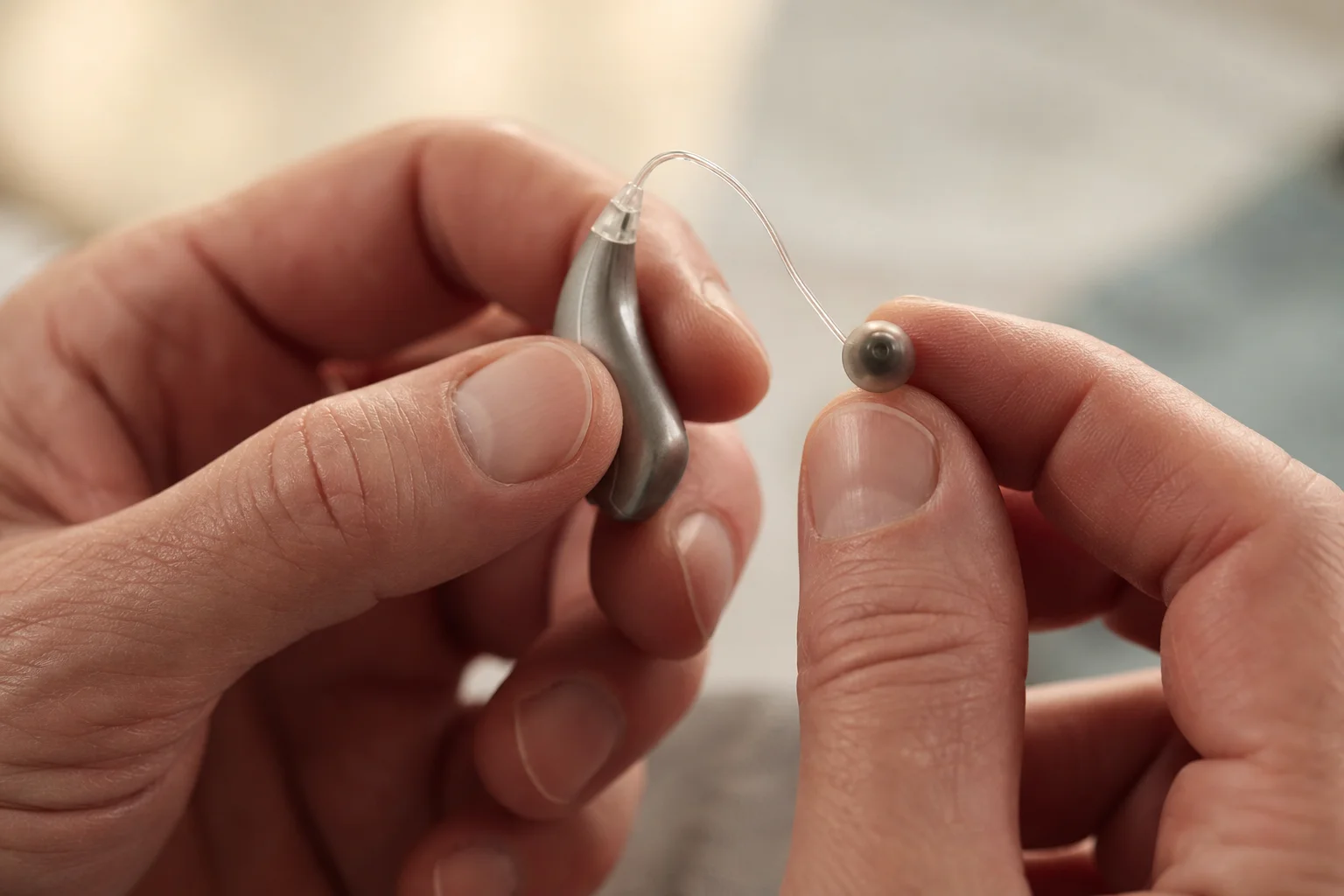
If you use a RIC or RIE hearing aid, one of the most important spare parts is the receiver. The receiver is the small speaker unit that sits close to the ear canal and sends amplified sound from the hearing aid into the ear. It is connected to the hearing aid by a thin wire and is usually used together with a dome or earmould.
See how to choose the correct receiverReceivers are available in different power levels, often marked as LP, MP and HP. These letters refer to the strength or output level of the receiver. Choosing the correct receiver power is important because the receiver must match your hearing aid fitting, your hearing loss and the hearing aid model.
Hearing aid receivers: LP, MP and HP explained
A hearing aid receiver is the speaker part of a receiver-in-canal or receiver-in-ear hearing aid.
What is a hearing aid receiver?
The hearing aid body sits behind the ear, while the receiver sits in or near the ear canal. This receiver delivers sound directly into the ear through a small dome or custom earmould.
This is different from a traditional BTE hearing aid with a sound tube. A standard sound tube is usually a hollow tube that guides sound from the hearing aid body into the ear. A receiver contains the actual speaker component. This is why many users who think they need a “tube” may actually need a receiver.
What do LP, MP and HP mean?
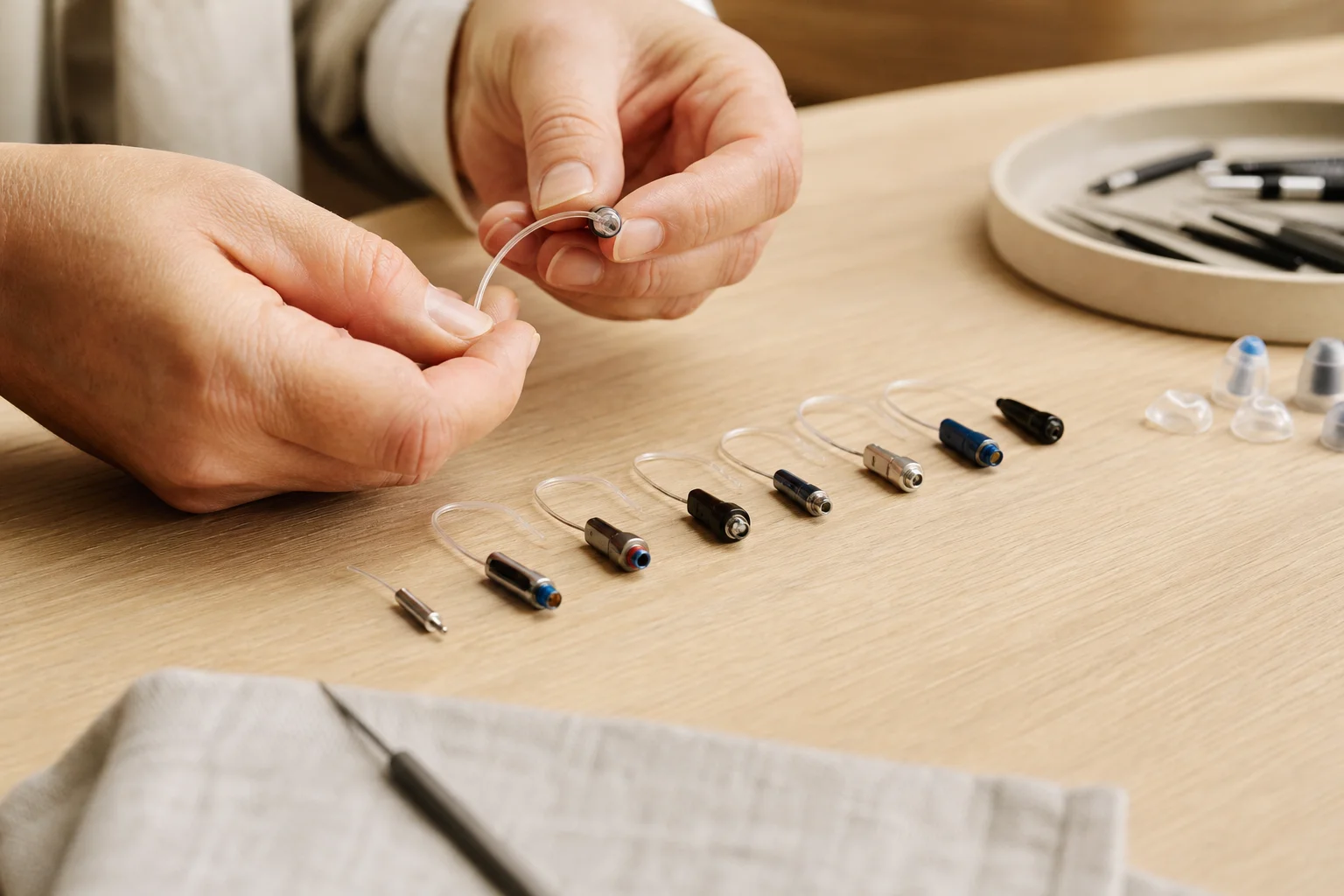
LP, MP and HP describe different receiver power levels.
They do not describe quality levels. A HP receiver is not “better” than a LP receiver – it is simply made for a different fitting need.
- LP usually means Low Power.
- MP usually means Medium Power.
- HP usually means High Power.
The correct receiver power depends on your hearing loss and how your hearing aids have been programmed. If your hearing aids were fitted with LP receivers, you should normally replace them with the same LP receiver type unless your hearing care professional has changed your fitting.
Receiver power levels compared
Is HP better than LP or MP?
No. HP is not automatically better. Receiver power is about matching the hearing aid to the user’s hearing loss and fitting. A receiver that is too powerful can sound uncomfortable or unsuitable, while a receiver that is too weak may not provide enough amplification.
The best receiver is the one that matches your hearing aid model, side, wire length, receiver system and programmed fitting. In most cases, the easiest and safest approach is to match the markings on your current receiver exactly.
Do all receivers use LP, MP and HP?
No. LP, MP and HP are common receiver power markings, but they are not the only system used for hearing aid receivers.
Different hearing aid brands use different names, letters or numbers to describe receiver strength. This is why it is important to match the exact receiver type used by your hearing aid, instead of assuming that all power levels are named the same way.
Some receiver systems use LP, MP and HP, which usually mean Low Power, Medium Power and High Power. Other systems use letters such as S, M and P, where S may stand for Standard, M for Medium and P for Power. Some brands use numbers instead, such as 60, 85 and 100, or 40, 50 and 60, to indicate different receiver strengths.
- LP / MP / HP = Low Power / Medium Power / High Power
- S / M / P = Standard / Medium / Power
- 60 / 85 / 100 = numeric power levels, often used by Oticon-style miniFit receivers
- 40 / 50 / 60 = numeric power levels used on some Starkey receiver systems
- L / M / P = Low / Medium / Power, used on newer Starkey SnapFit 2.0 receivers
This means that a “power receiver” can be written in several different ways depending on the brand and receiver system. HP, P, Power, 100 or 60 dB may all refer to a stronger receiver within their own system, but they are not automatically interchangeable. Always choose the receiver that matches your hearing aid model, receiver system, side, length and original power level.
Receiver power and hearing aid fitting
The receiver is part of the hearing aid fitting. When a hearing care professional programs a hearing aid, the chosen receiver power is included in the setup. The hearing aid settings are calculated based on the receiver type, dome or earmould, and the user’s hearing test results.
This means that changing receiver power is not just a small hardware change. It can change how the hearing aid delivers sound. If you switch from LP to MP or HP without adjustment, the hearing aid may not sound as intended.
How to identify your receiver power
The easiest way to identify your receiver power is to look at the markings on the receiver itself.
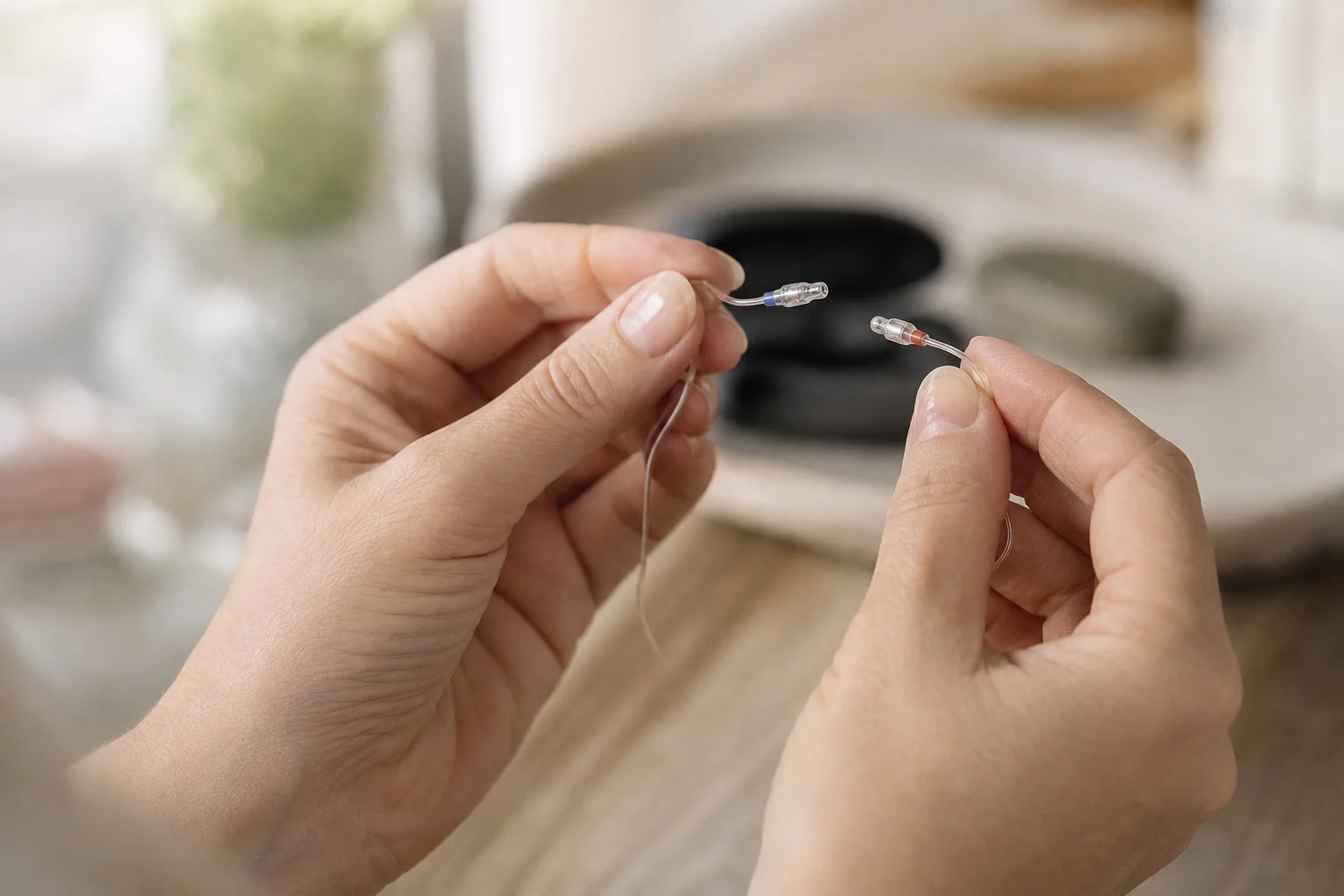
Many receivers have printed or embossed letters such as LP, MP or HP. They may also include a number that shows wire length or size.
You should also check the ear side. Receivers are usually made for either the left or right hearing aid. In many hearing aid systems, blue indicates the left ear and red indicates the right ear.
- Power: LP, MP or HP
- Side: left or right
- Length: often shown as a number such as 0, 1, 2, 3 or 4
- Receiver system: for example SureFit, SureFit 2, SureFit 3, miniFit or another brand-specific system
Hearing aid receiver basics
- Replace the wax filter if the sound is weak or blocked.
- Check whether the dome is dirty, damaged or loose.
- Clean the hearing aid and microphone openings carefully.
- Check the battery or charge level.
- Replace the receiver if the sound problem continues or the receiver wire is damaged.
Can you replace a hearing aid receiver yourself?
Many hearing aid receivers can be replaced at home, depending on the hearing aid model and receiver system. In many cases, the receiver can be removed from the hearing aid and a new one can be attached without special tools.
However, the receiver should fit securely and correctly. If the receiver is difficult to remove, does not click into place or does not look the same as the original part, do not force it. The wrong receiver can damage the hearing aid connection or lead to poor sound performance.
How to choose the correct receiver
Before buying a new receiver, check the information on your existing receiver. If possible, match the receiver exactly.
- Choose the correct brand and receiver system.
- Choose the correct ear side: left or right.
- Choose the correct wire length.
- Choose the correct power level: LP, MP or HP.
- Use the same power level unless your hearing care professional has advised otherwise.
If you are unsure, take a clear close-up photo of your current receiver markings and compare the details before ordering. The letters and numbers on the receiver are often the easiest way to identify the correct replacement.
FAQ about LP, MP and HP receivers
What does LP mean on a hearing aid receiver?
LP usually means Low Power. It is a receiver option used when the hearing aid fitting needs lower output, often for milder hearing losses.
What does MP mean on a hearing aid receiver?
MP usually means Medium Power. It provides more output than LP and is often used for moderate hearing losses or fittings that need a balanced power level.
What does HP mean on a hearing aid receiver?
HP usually means High Power. It is used when the fitting requires stronger output than LP or MP can provide.
Can I change from LP to MP or HP?
You should not change receiver power unless your hearing care professional has advised it. Receiver power is part of the hearing aid fitting, and changing it can affect sound quality, comfort and amplification.
Is a higher-power receiver better?
No. A higher-power receiver is not better for everyone. The correct receiver is the one that matches your hearing loss, hearing aid model and programmed fitting.
How do I know which receiver power I have?
Check the markings on your current receiver. Many receivers show LP, MP or HP, along with a side colour and length number. If you are unsure, take a photo of the markings and ask for help before ordering.
Why does my hearing aid sound weak?
Weak sound can be caused by a blocked wax filter, dirty dome, moisture, low battery, damaged receiver or a fault in the hearing aid. Check the wax filter and dome first before replacing the receiver.